A video goes up and the subscriber count barely moves the view counter. The instinct is to treat this as one problem — subscribers have lost interest, so fix the content. That framing is usually wrong. Low subscriber viewership is a symptom with three different possible causes, and they call for different fixes: subscribers never saw the video because notifications or feed ranking didn't surface it, YouTube didn't push it into non-subscriber feeds or search to build the early momentum that helps subscriber delivery too, or subscribers saw it and genuinely weren't interested. Diagnosing the wrong one wastes a cycle you don't get back.
What "subscribers not watching" actually measures
Subscriber views are one traffic source among several, not a standalone verdict on the video. YouTube analytics splits traffic by source — subscriptions, browse features, suggested videos, search — and subscriber viewership is usually a slice of the subscriptions row, not the whole picture.
A low number in that slice can mean the video had few impressions among subscribers, a low click-through rate among the subscribers who did see it, or genuinely low interest once they clicked. Those are different problems with different signatures in your data. Before deciding subscribers are the issue, check impressions vs views to see whether the shortfall starts at the top of the funnel or further down.
The notification and feed reality: why the bell doesn't guarantee a view
Subscribing to a channel does not guarantee a subscriber sees every upload. Notification bells default to a personalised setting rather than 'All,' so most subscribers only get pushed an alert if YouTube's ranking decides to send one. The subscriptions feed and home feed are both ranked, not chronological, so a video can sit lower than the newest upload from a channel a subscriber checks less often. And a meaningful share of any subscriber list is dormant — accounts that no longer actively watch — so 'subscribed' does not mean 'present.' A subscriber can miss a video through any of these without making a conscious decision to skip it.
Treating every subscriber as a captive audience who will watch anything you publish is the wrong mental model. It leads to blaming subscribers for something they were never guaranteed to see in the first place. The more useful mental model is that subscribers are a pool YouTube samples from first, not a pool it delivers to in full every time.
Packaging failure vs relevance failure vs discovery failure
These three failures produce the same symptom — subscribers didn't watch — for different reasons, and only one of them is about the video's quality.
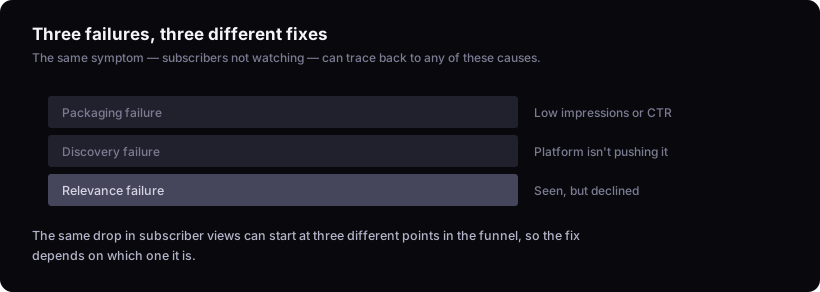
A packaging failure means subscribers were shown the video but the thumbnail and title didn't earn the click: impressions among that audience are normal, but click-through rate among them is low. A discovery failure means YouTube isn't pushing the video into feeds or search for non-subscribers, which starves the early viewing that would otherwise have carried into stronger subscriber delivery too. This is a separate problem from packaging: packaging is about the click once someone sees the video, discovery is about how many people — subscriber or not — get shown it at all. A relevance failure is the one people assume by default: subscribers clicked, because the thumbnail and title worked, but didn't stay — impressions and CTR look normal while watch-through is low. This usually points to the video's subject drifting from what the channel's audience actually shows up for, rather than a broken title.
Confusing these matters because the fix for each is different. A packaging failure is fixed by testing a different thumbnail or title against the same footage, since the video itself already earns interest once seen. A relevance failure is fixed by checking the video's subject against the channel's own recent history before assuming presentation is the problem. A discovery failure isn't fixed by editing this video, but it isn't a dead end either: check whether recent uploads on the same topic got pushed further than usual, since a channel-wide pattern points at topic or format choices worth adjusting on the next video, even though it won't rescue this one.
Reading your own channel for which failure it is
The fastest way to tell these apart is comparing impressions, click-through rate and view source across several recent uploads, not just the one that underperformed.
Start with impressions, which you can split by subscriber status in YouTube Studio's Advanced mode under the video's Reach tab, or through the subscriber/non-subscriber breakdown in the Audience section. If impressions among subscribers are low across multiple uploads, that's a discovery pattern, not a one-off packaging mistake on this video — check whether click-through rate is normal once someone does see it, because a normal CTR with low impressions points away from the thumbnail and toward reach.
If impressions are healthy but CTR is low specifically among subscribers, that's a packaging or fatigue signal — the audience that already knows the channel isn't curious enough about this specific video to click. If impressions and CTR both look normal but the video still underperforms after the click, the retention graph tells you whether it's a hook problem or a promise-not-kept problem; see how to read your retention graph for what that shape looks like.
Also worth doing: compare this video's total performance against the channel's own recent history, not against an external number. What counts as an outlier is relative to a given channel's normal range, and the same logic applies in reverse — a video that's slightly below the range of the last several uploads isn't a crisis, but one that falls below all of them is worth investigating properly. See what is an outlier video for how that comparison works.
Does posting more often bring subscribers back?
Upload frequency rarely fixes a packaging or relevance problem, because more uploads only means more chances to repeat the same title or topic mistake. If subscribers are declining specific videos, they'll decline more of them faster on a tighter schedule, not fewer.
The cadence question is really a quality-versus-frequency tradeoff, not a subscriber-retention lever by itself — see how often should you upload for the fuller version of that argument. Posting more can help newer channels build judgement through repetition, but it doesn't substitute for fixing whatever is actually causing subscribers to skip.
What to fix depending on where the failure sits
The right next step depends entirely on which of the three failures your analytics point to — there's no single universal fix.
| Failure type | What analytics show | What to check next |
|---|---|---|
| Packaging | Normal impressions but low CTR among subscribers specifically | Title and thumbnail against recent uploads that performed better |
| Discovery | Low impressions across both subscriber and non-subscriber traffic | Topic fit and whether similar past videos got pushed further |
| Relevance | Normal impressions and CTR, but low watch-through | Whether the video matches the topic promise made by the title |
If it looks like packaging, work through how to make a thumbnail that gets clicks and how to title a video before touching anything else — those two levers cover most packaging failures. If the pattern looks like a relevance failure, the fix is topical, not cosmetic: line up the last several uploads by topic, format and any recurring guest or series element, and check whether this video is the one that breaks the pattern. A video that shares little with what the channel's audience has stuck around for before is the one worth treating as a relevance failure, rather than assuming a better thumbnail will rescue it.
Some part of this can't be resolved with certainty from your own channel's data alone. Where the diagnostic guide on why a video isn't getting views can help is narrowing the list of causes — it can't hand you a guaranteed answer, because nobody outside YouTube has visibility into the parts of this that aren't published.
The limit here
This reasons from YouTube's published documentation on impressions, click-through rate, and how search and suggested videos are ranked, plus general method for reading channel analytics. It can't see any specific channel's actual subscriber-versus-non-subscriber traffic split, can't diagnose an individual video, and can't state what YouTube's internal delivery logic weighs beyond what YouTube itself has described publicly. Anyone who tells you the exact internal formula is guessing, same as everyone else outside YouTube.
Next step: pull the last five to eight uploads, lay their impressions, CTR and subscriber-source view counts side by side, and see which of the three failure patterns actually shows up before changing anything. """