Mostly no — and the exceptions are narrower than the argument around them suggests. Tags are not a discovery lever: they do not rank a video higher for searches its title and description already match, and they do not get it suggested more often — the systems that do that job run on title, description text, and how viewers behave once they click. Three narrow jobs survive: they catch misspellings, disambiguate a title that could mean two things, and help group a video into the right series or franchise. That is the whole list.
What tags were originally built to do
Tags exist because early video search had almost nothing else to go on. Titles were short, descriptions were often empty, and automatic transcription didn't exist yet. Metadata fields — tags included — gave the platform's search index extra text to match against, the same way keyword meta tags once helped web search engines figure out what a page was about.
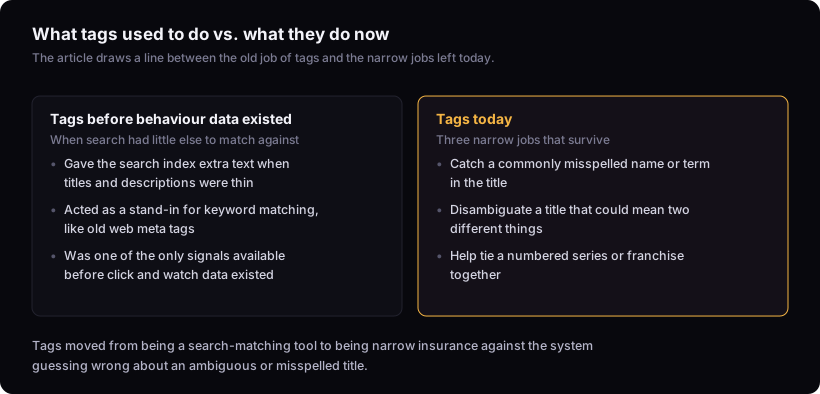
That era is gone. Search and recommendation systems now have a title, a full description, closed captions, and — most importantly — a record of what happened after a viewer clicked: did they watch, did they leave in the first ten seconds, did they click through from a suggestion and stay. That behavioural signal is far richer than anything a creator types into a tag box, and it's the kind of signal a tag field can't produce, because a tag is a claim the creator makes about their own video, not a measurement of what a viewer did with it.
The case that tags no longer move the needle
The mechanism argument is simple: ranking and recommendation systems are built to reward what viewers actually do, not what creators say a video is about. A tag is unverified metadata sitting next to a title, a description, and a mountain of engagement data. If a system is choosing between trusting a creator's self-reported keywords and trusting what thousands of viewers did after watching, the self-reported keywords lose by default.
This is a mechanism claim, not a measured one — nobody outside the platform can see the ranking code, and this article isn't claiming to have tested tags on or off. But the reasoning holds up against everything YouTube has publicly said about how discovery works: title and thumbnail decide the click, and what happens in the first seconds and minutes of a watch decides whether the video gets shown again. Tags don't appear anywhere in that description.
The narrow jobs tags might still do
Tags aren't useless, they're just small. Three specific functions survive:
Misspelling capture. If your title uses a name or term that's commonly misspelled, a tag with the common misspelling can act as a safety net for search queries that never match your title text.
Disambiguation. If your title is genuinely ambiguous — a common word, a name shared with something else entirely — a tag can nudge the system toward the correct category for your video.
Series and franchise grouping. If you run a numbered series or a recurring format, consistent tags can help tie those videos together as a set, which is closer to bookkeeping than to discovery.
None of these are ranking boosts. They're closer to insurance against the system guessing wrong about what your video is, which is a different job than getting it seen more.
Why the belief persists despite weak evidence
The belief survives because of a correlation trap. Top-performing videos usually have every metadata field filled in, tags included, because the creators who fill in every field tend to be the same creators who also nail the title, the thumbnail, and the hook. Tags get credit for a result that the other three actually produced.
There's a second effect stacked on top: survivorship bias in creator anecdotes. Someone fills in fifteen tags, the video does well, and they tell the story as "tags worked." Nobody writes the post about the fifteen tagged videos that flopped anyway, because there's no story there. The videos that confirm the belief get repeated; the ones that don't get forgotten. That's how a habit with almost no effect turns into folklore that gets repeated in comment sections for a decade.
Where creator effort actually pays off instead
If tags move the needle this little, the honest question is where the same ten minutes goes further. The strongest documented link in packaging is between the title and thumbnail and the click, and between the opening seconds and whether the click turns into a watch. Writing the title so it makes a specific, checkable promise does more for a video's chances than any tag ever will, and the rest of the upload page — description, thumbnail, chapters — carries more real weight too.
If your current bottleneck is that videos aren't getting clicked at all, how to write youtube titles that get clicks is a better use of the next hour than a tag audit. If the problem looks more like getting clicked but not watched, or not showing up anywhere in the first place, why your youtube videos aren't getting views walks through the more likely causes before you touch tags at all.
Is removing all tags ever risky?
Mostly not — you lose the three jobs above, and each applies only in its own case. Disambiguation is the one never to skip when it does apply: a genuinely ambiguous title with no other disambiguating text anywhere on the page. If your title is a common phrase, a shared name, or something that could plausibly belong to an unrelated topic or franchise, a couple of specific tags cost nothing and remove a small amount of guesswork for the system. Where none of the three apply — an unambiguous title, no proper noun anyone misspells, no series to group — leaving tags blank is neutral, not risky. Filling them in generically ("youtube", "video", your niche name) does nothing either way — it's not a penalty, it's just wasted time.
A sane default for tagging your next upload
Spend under a minute on it. If your title could plausibly mean something else, add a tag that says which one you mean — that is the one to do every time. Then add your channel or series name if you run one, add the obvious misspelling of any proper noun in your title, and stop. Don't build a tag list, don't research tag competition, don't copy a competitor's tags. That time is better spent rereading your title against the metric glossary to check you're using terms like impressions and CTR the way your analytics actually report them, or running a check with the bench optimize on the parts of the upload that carry the real weight.
The limit here
This reasons from how YouTube's public statements describe search and recommendation, and from general packaging methodology — not from a first-hand tag experiment or any channel's private data. Nobody outside the platform can say precisely what its ranking systems weigh, including this article. It can't tell you what tags did for your specific video, only what the publicly available mechanism suggests is plausible and what isn't.