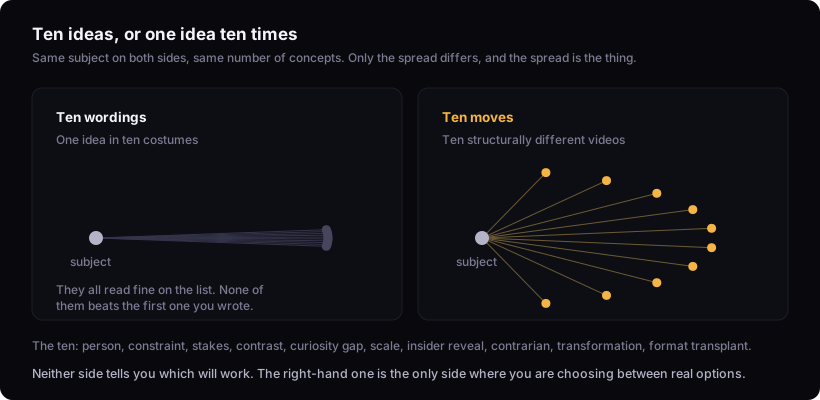
The problem is almost never that you cannot find YouTube video ideas. It is that the ten you write down are the same idea wearing ten costumes — same subject, same angle, same shape, different words. They all read fine on the list and none of them is better than the first.
The fix is not more ideas. It is a set of deliberate moves that each force a structurally different concept out of the same subject.
Two rules that come before any of it
Packaging is the idea. If you cannot picture the title and thumbnail for a concept, it is not an idea yet — it is a topic. Kill it at this stage, where it costs you a line on a list, rather than after a weekend of filming when it costs you the weekend.
Never repeat a title you have already published. Obvious, routinely violated, and the fastest way to compete with yourself in your own suggested feed.
The ten moves
Take one subject and run it through all ten. The point is not that every move produces something good — it is that they produce concepts that differ structurally, so you end up choosing between real options.
| Move | What it does | Applied to "home espresso" |
|---|---|---|
| Person / POV | Tell it through a specific someone | A barista of 20 years reacts to beginner setups |
| Time / constraint | Add a clock or a hard limit | Dialling in a new bag in under 10 minutes |
| Stakes / consequence | Name what is lost by getting it wrong | The mistake that ruins a £40 bag of beans |
| Contrast / comparison | Put two things against each other | £200 machine vs £2,000 machine, blind |
| Curiosity gap | Withhold the payoff | Why your shots taste sour and it isn't the beans |
| Scale / extremity | Biggest, smallest, first, worst | The cheapest setup that makes genuinely good espresso |
| Insider / reveal | Pull back a curtain | What cafés do that home setups never copy |
| Contrarian | State the common belief, then deny it | Pressure profiling is not your problem |
| Transformation | Show the journey | Bad espresso to good in one week |
| Format transplant | Borrow a structure proven elsewhere | A blind taste test, from wine content |
Ten moves, one subject, ten genuinely different videos. That is the difference between an idea list and a list of synonyms.
Where to get the raw subjects
The moves need something to operate on. Four sources, in rough order of how well they transfer:
Your own comments and replies. The highest-signal source you have and the one most people skim. A question asked twice is a video. A question asked twice and answered badly by the existing results is a good video.
Outliers on channels your size. A video that beat its own channel's median is evidence a format worked, independent of how big that channel is. That is a different signal from "this video has a lot of views", and it is the one a smaller channel can act on — how to find them.
Adjacent niches. The format transplant move lives here. A structure that is worn out in tech is novel in gardening.
What you keep explaining. If you have said the same thing three times in a group chat, it is a video with a proven demand of at least three people, which is three more than most ideas start with.
Triage before you commit
An idea list is only useful if things leave it. Three questions, in order:
- Can you picture the packaging? If not, it goes back to being a topic.
- Would you click it, in a feed, if it were not yours? The honest answer is usually no, and that is the answer that saves you the weekend.
- Can you actually make it? Not "in principle" — with the equipment, footage and access you have this month.
Anything that survives all three is worth scheduling. Most will not, and that is the process working rather than failing.
Where this stops working
None of it tells you whether the subject has an audience. These moves generate structurally distinct concepts from a subject you supplied. Whether anybody is looking for that subject is a research question and a completely separate one — it is the thing to answer before you get here, not after.
It does not know your audience. A move that works on one channel is inert on another, and no framework can see the difference from outside.
An idea is not a prediction. Nothing here, and nothing anywhere else, tells you which of the ten will work. What the moves buy you is a real choice instead of one idea and nine restatements of it.
Finding YouTube video ideas faster
The idea generator runs these moves for you, one at a time or as a batch, and keeps them on a board so ideas can firm up before they cost anything. It checks proposals against titles your channel has already published, and it will not rank them by predicted performance — because that is not knowable, and a confident ranking would be the least useful part of the output.
The full method, including what it cannot do, is on finding an angle.